Foundayo (Drug class: Nonpeptide GLP-1 receptor agonist)
US oral Foundayo (orforglipron), label revised July 2026. For long-term weight reduction in adults with obesity, or overweight plus a weight-related condition, alongside reduced-calorie eating and increased activity. It is not labeled to treat diabetes or sleep apnea.
Educational draft · independent clinical review pending. Silent mechanism animation available; no recorded narration.
Uses / Symptoms
- Weight reduction and long-term maintenance in adults with obesity
- Also for adults with overweight and a weight-related condition
- Used alongside reduced-calorie eating and increased physical activity
Effects
- Activates GLP-1 receptors involved in appetite regulation
- Reduces food intake and body weight; individual results vary
- Also slows stomach emptying, particularly early in treatment
Side effects
- Nausea, constipation, diarrhea, vomiting or abdominal discomfort
- Headache, fatigue, reflux, belching or hair loss can occur
- Boxed thyroid-tumor warning; important pancreatic, gallbladder, dehydration and allergic risks
How does Foundayo work? What is the Mechanism Of Action (MOA)?
Foundayo activates a receptor used by GLP-1, a natural signal involved in appetite. It can reduce how much a person eats and support weight loss. It is an oral, nonpeptide medicine, not an injection or insulin.
The mechanism, step by step
- Appetite signals help regulate intake
GLP-1 receptors participate in the body's regulation of appetite and calorie intake.
- Orforglipron activates the receptor
The nonpeptide molecule activates human GLP-1 receptors after oral absorption.
- Food intake decreases
Appetite-related effects reduce food intake. Stomach emptying also slows, most strongly early on.
- Weight can fall over time
Clinical studies support weight reduction and maintenance with the accompanying diet and activity program. Weight loss is not exclusively fat loss.
A perspective-aware, six-chapter visual narration is available when JavaScript is enabled.
Questions & Answers (FAQ)
How does Foundayo work?
Foundayo activates a receptor used by GLP-1, a natural signal involved in appetite. It can reduce how much a person eats and support weight loss. It is an oral, nonpeptide medicine, not an injection or insulin.
Is Foundayo an approved medicine?
Yes. FDA approved Foundayo, the brand for orforglipron oral tablets, on April 1, 2026. The July 2026 label describes adult weight management; Foundayo is not another name for tirzepatide or semaglutide.
Who is Foundayo approved for?
Adults with obesity, or adults with overweight plus at least one weight-related condition, for weight reduction and long-term maintenance alongside reduced-calorie eating and increased physical activity. Safety and effectiveness in children have not been established.
Does diabetes research mean Foundayo treats diabetes?
Not as a current labeled indication. Orforglipron has been studied in people with type 2 diabetes, including weight-management studies, but the checked US Foundayo label is for adult weight management. Trial participation and regulatory approval are different facts.
Does everyone lose the same amount of weight?
No. Trials show average effects across defined groups, not a guaranteed personal result. Both fat and lean mass can decrease, although the label reports greater fat-mass loss. Clinical benefit is not measured by whether nausea occurs.
What side effects are common?
Common effects include nausea, constipation, diarrhea, vomiting, abdominal discomfort, indigestion and reflux. Headache, fatigue, belching, gas, bloating and hair loss also appear in the label's common-adverse-reaction list.
What does the thyroid boxed warning mean?
The warning concerns possible thyroid C-cell tumors. Unlike rodent-active drugs in this class, orforglipron is not pharmacologically active in rats or mice and did not produce tumors in rodents; relevance of the class finding to humans is unknown. Personal or family medullary thyroid carcinoma, or MEN2, is a contraindication.
What other important risks are described?
The label describes pancreatitis, serious allergic reactions, severe gastrointestinal effects, gallbladder disease and kidney injury associated with dehydration. It also warns about retinopathy complications in people with type 2 diabetes. Severe gastroparesis and severe hepatic impairment are settings in which it is not recommended.
Can low blood sugar occur?
Yes. Hypoglycemia can occur, and the risk is higher with insulin or insulin-releasing medicines such as sulfonylureas. Being a weight-management medicine does not remove its effects on glucose regulation.
Why do other medicines and pregnancy matter?
Some medicines change how the body processes Foundayo, and Foundayo can affect other medicines such as simvastatin. Slower stomach emptying may affect oral hormonal contraceptives. The label warns of potential fetal harm; weight loss offers no benefit during pregnancy. Discuss other medicines, contraception and pregnancy with the care team.
Why is anesthesia mentioned in the label?
Slower stomach emptying can leave residual stomach contents despite fasting. Pulmonary aspiration has been reported with GLP-1 medicines during general anesthesia or deep sedation. The label does not establish a universal medicine-holding interval that eliminates this risk.
Where is official access information available?
Lilly provides Foundayo coverage guidance and a LillyDirect access page. A prescription and applicable eligibility requirements remain necessary. These links do not establish an individual's insurance coverage, current stock or final out-of-pocket cost.
Online stores and Pharmacies (Buy)
Official US manufacturer access and coverage information, checked October 17, 2026. Prescription and program eligibility apply; no price, stock or insurance-coverage guarantee is made.
No live price, stock or individual eligibility is verified here.
Animation chapters, evidence & visual limits
US Foundayo (oral orforglipron), adult weight management; July 2026 label. Not a diabetes, cardiovascular-outcome or sleep-apnea indication.
Educational draft; independent clinical review pending. Schematic signals are not molecular trajectories, measured concentrations or mapped human brain circuits. Orforglipron is not active at ordinary rat or mouse GLP-1 receptors; engineered animal studies must not be mistaken for unmodified-rodent evidence. Receptor-assay bias does not establish better clinical efficacy or safety than another medicine.
Original conceptual illustrations. AI-assisted editorial source check; independent clinical review pending. No recorded narration.
Chapter 1: Foundayo changes appetite-related signaling
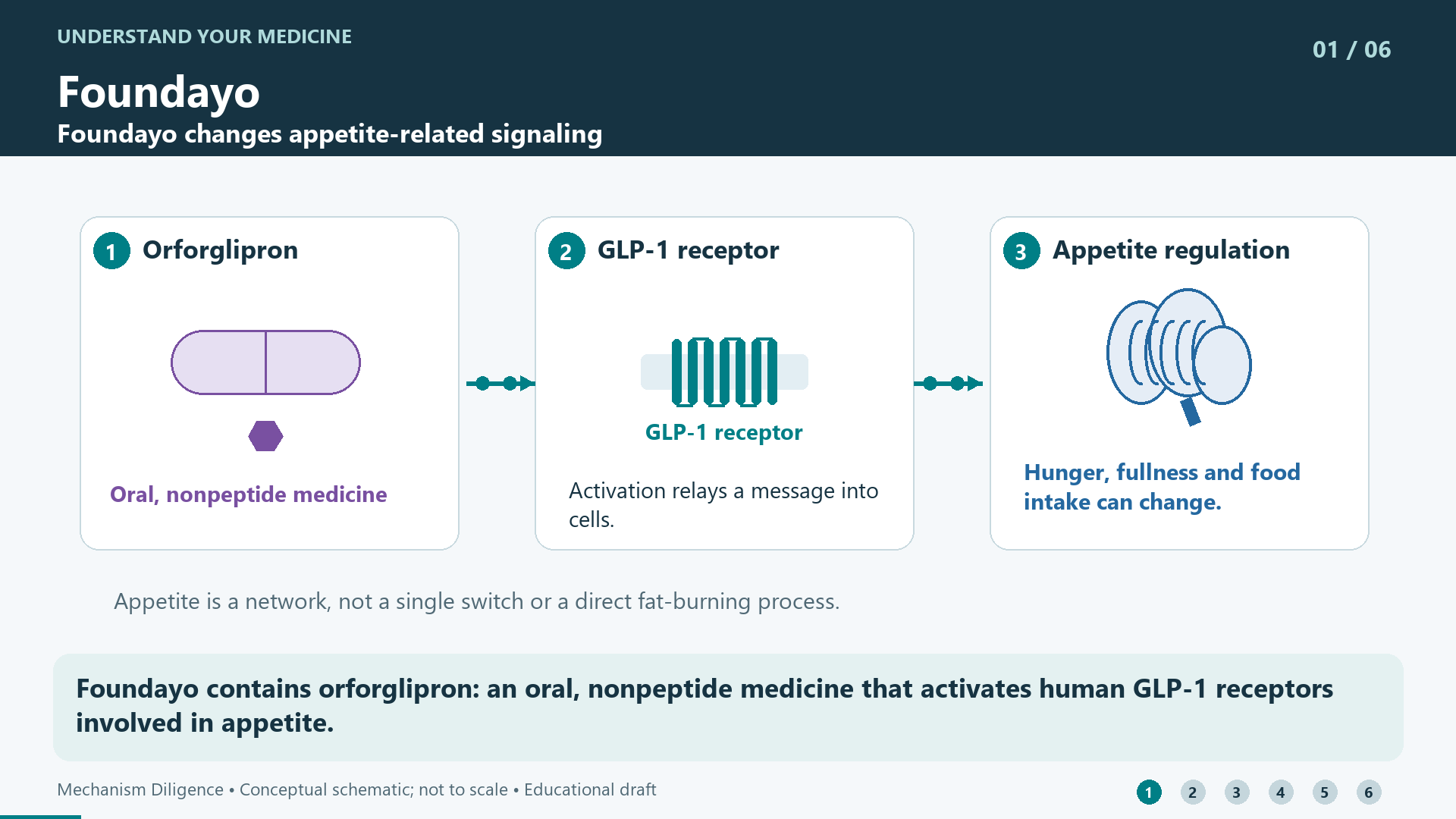
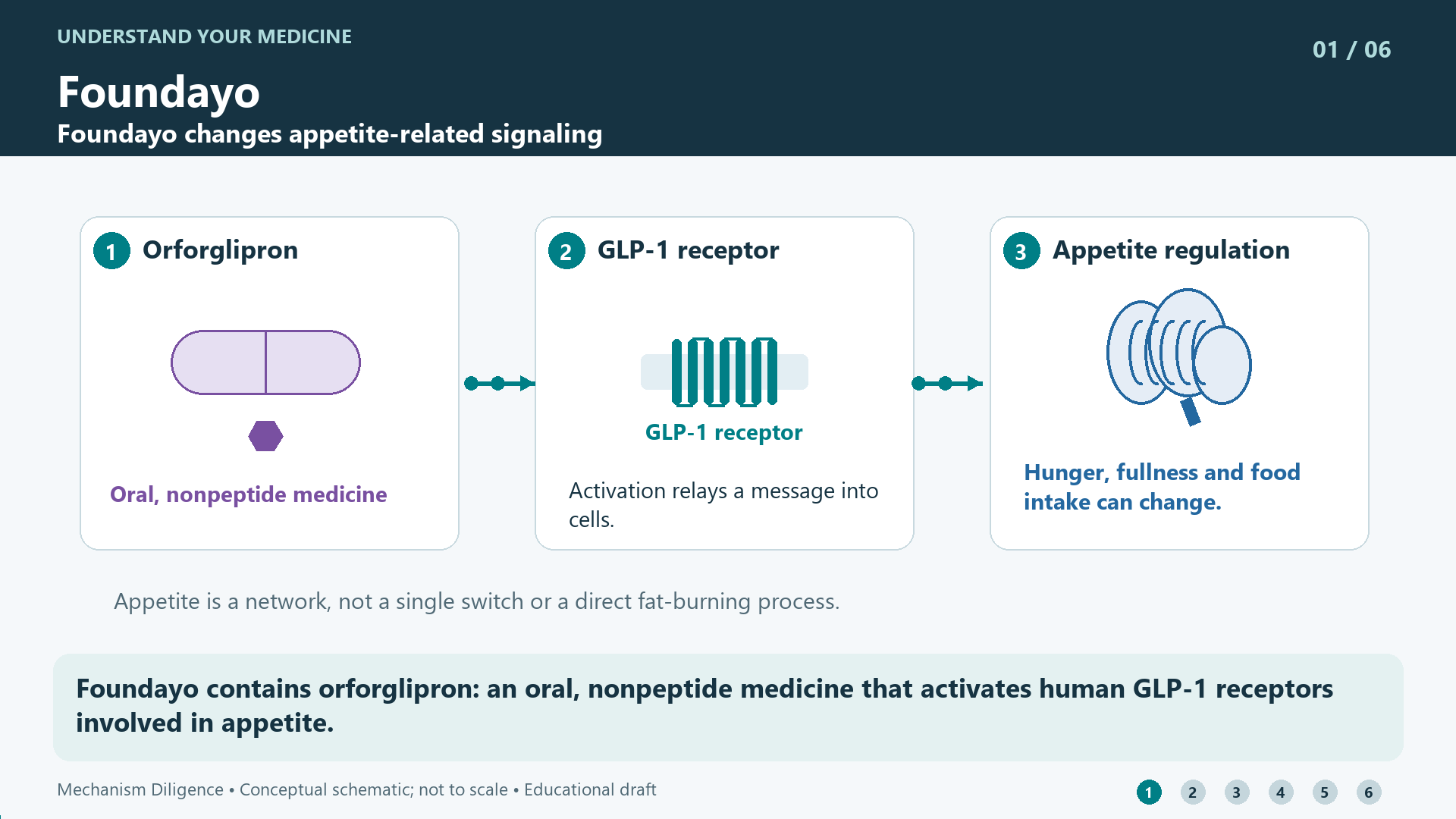
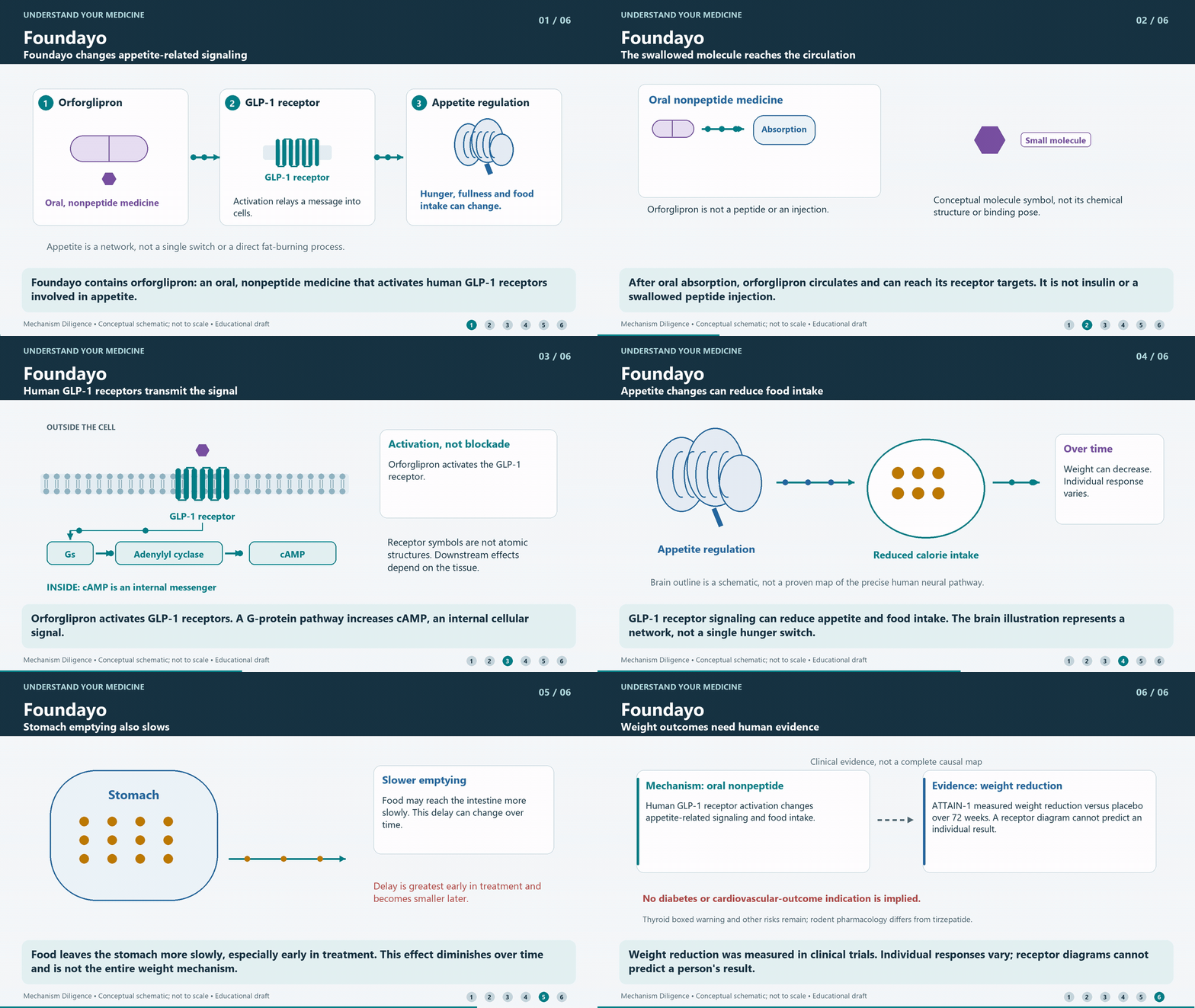
Foundayo contains orforglipron: an oral, nonpeptide medicine that activates human GLP-1 receptors involved in appetite.
This story follows a small molecule rather than a peptide injection. A receptor is a protein that detects a signal; activating it changes cellular activity.
The icons explain identity and direction of action, not the complete biological network.
- FDA Foundayo prescribing information — July 2026 · Boxed Warning; sections 1, 5, 12.1–12.3, 13.1 and 14 · Current US regulatory label; selected sections inspected · checked 2026-10-17
- Kawai et al. — Structural basis for GLP-1 receptor activation by LY3502970 · Results: receptor signaling, species selectivity and cryo-EM; DOI 10.1073/pnas.2014879117 · Primary cell, structural and animal study; indexed full-text excerpts inspected · checked 2026-10-17
Chapter 2: The swallowed molecule reaches the circulation
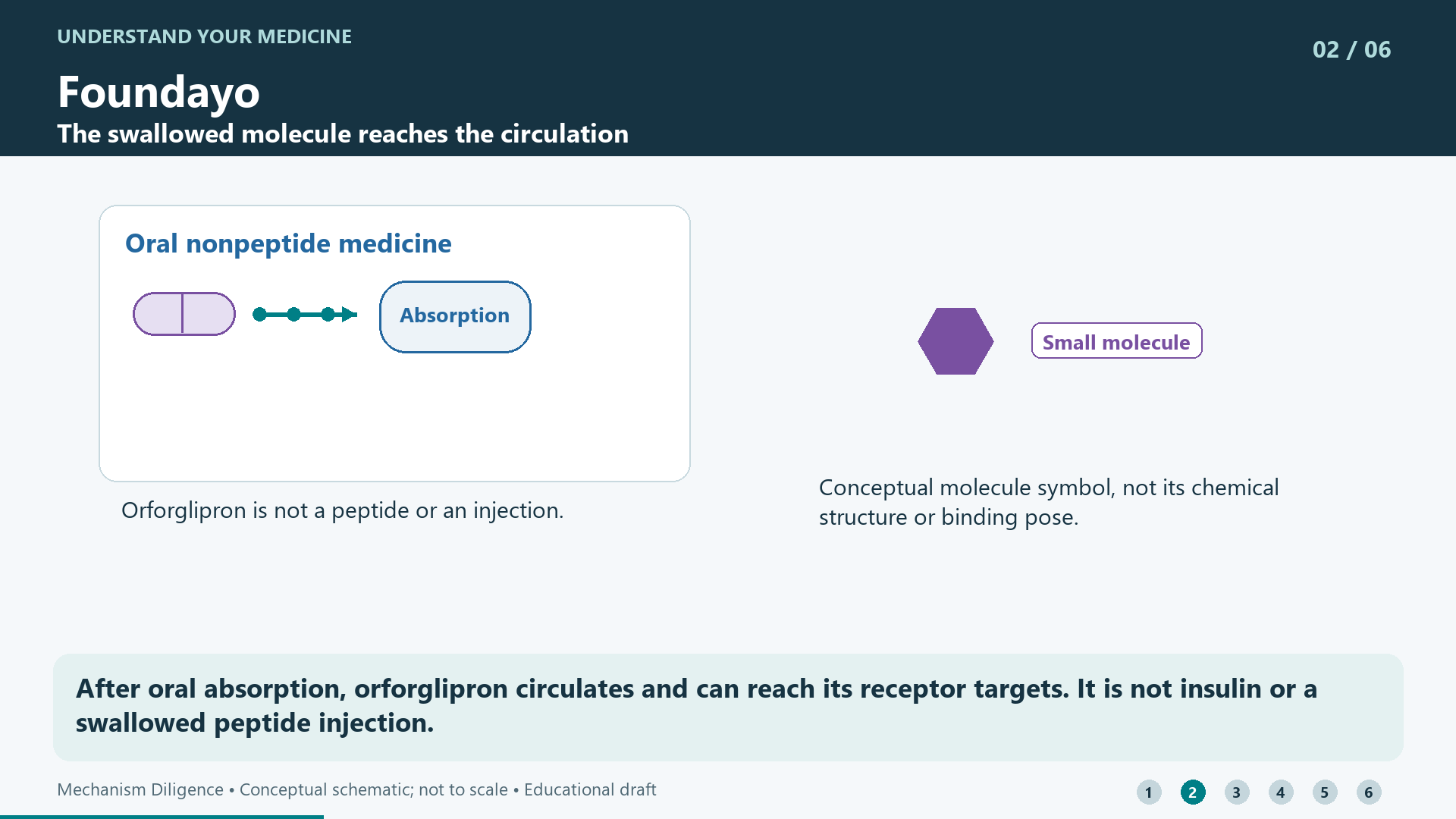
After oral absorption, orforglipron circulates and can reach its receptor targets. It is not insulin or a swallowed peptide injection.
Oral exposure is demonstrated in humans. The animation intentionally leaves the precise intestinal absorption site unspecified and does not portray every swallowed molecule entering blood.
Qualitative delivery schematic; no dose, absorption fraction or administration instructions.
- FDA Foundayo prescribing information — July 2026 · Boxed Warning; sections 1, 5, 12.1–12.3, 13.1 and 14 · Current US regulatory label; selected sections inspected · checked 2026-10-17
Chapter 3: Human GLP-1 receptors transmit the signal
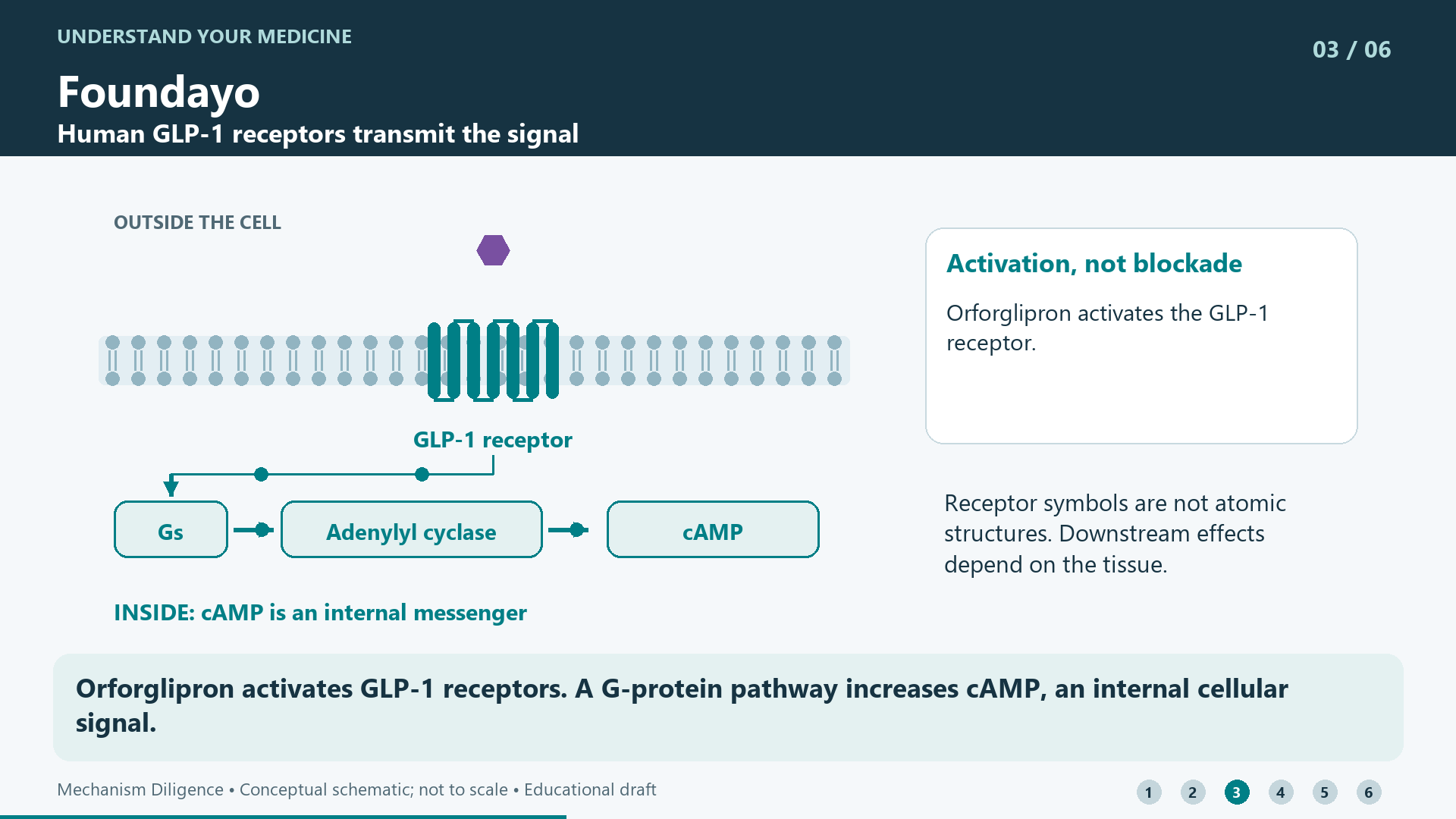
Orforglipron activates GLP-1 receptors. A G-protein pathway increases cAMP, an internal cellular signal.
Primary experiments show human GLP-1R engagement and G-protein/cAMP signaling with relatively low intrinsic efficacy and little arrestin recruitment. These assay findings do not establish clinical superiority. Structural studies support a binding arrangement distinct from the natural peptide.
Species matters: ordinary rodent receptors do not respond like human receptors. Some experiments used humanized or modified rodents.
- Kawai et al. — Structural basis for GLP-1 receptor activation by LY3502970 · Results: receptor signaling, species selectivity and cryo-EM; DOI 10.1073/pnas.2014879117 · Primary cell, structural and animal study; indexed full-text excerpts inspected · checked 2026-10-17
- Sloop et al. — Pharmacological basis for nonpeptide GLP-1R agonism by orforglipron · Abstract: binding, effector activation, arrestin and engineered-rodent experiments · Primary receptor and preclinical study; indexed abstract inspected · checked 2026-10-17
Chapter 4: Appetite changes can reduce food intake
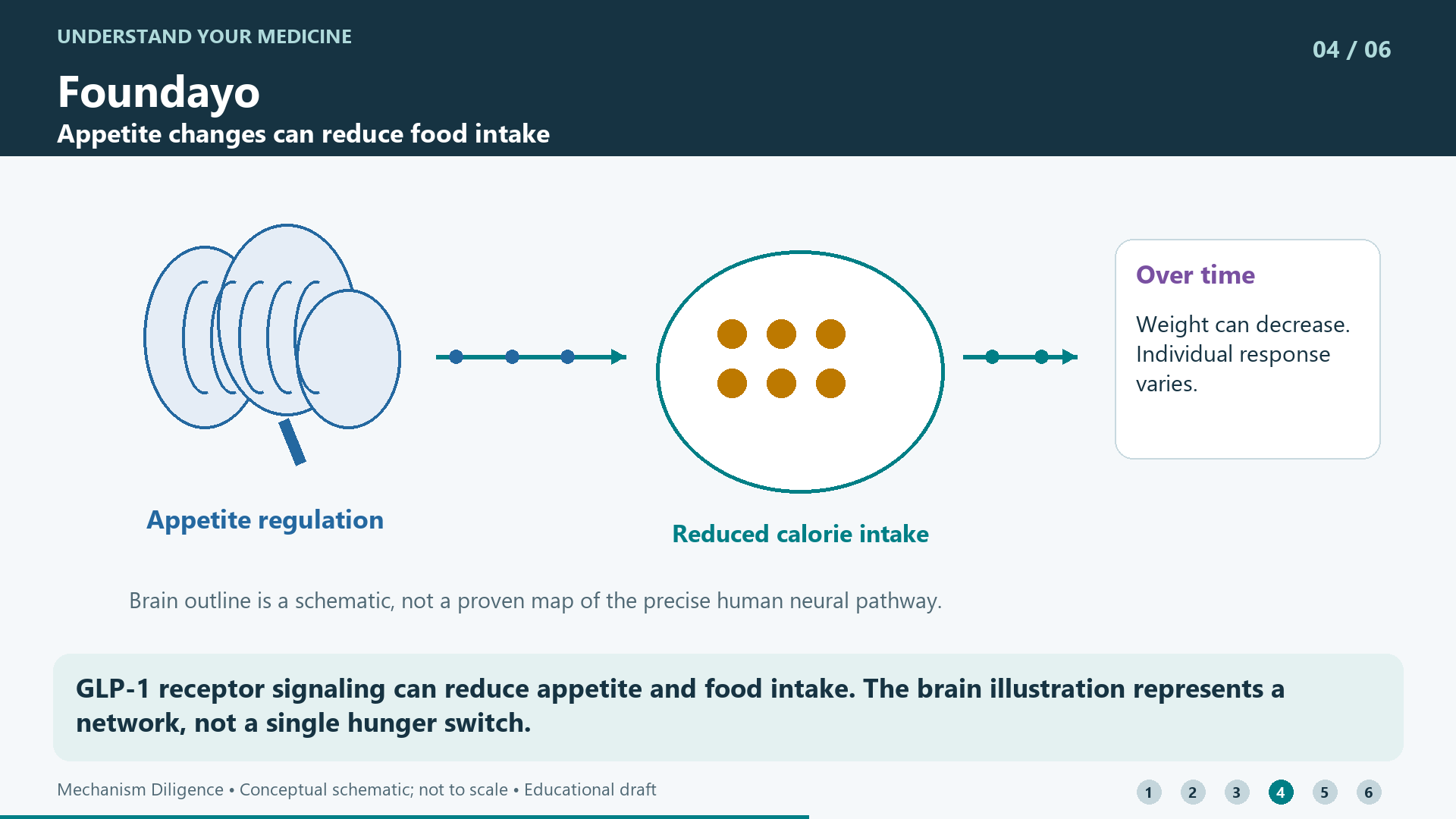
GLP-1 receptor signaling can reduce appetite and food intake. The brain illustration represents a network, not a single hunger switch.
Animal target-engagement and neuronal experiments support an appetite pathway, while the clinical label connects treatment to reduced intake. A cellular cAMP diagram alone does not establish every step in a person's eating behavior.
Detailed neuronal localization is nonclinical evidence, not direct human circuit mapping.
- FDA Foundayo prescribing information — July 2026 · Boxed Warning; sections 1, 5, 12.1–12.3, 13.1 and 14 · Current US regulatory label; selected sections inspected · checked 2026-10-17
- Sloop et al. — Pharmacological basis for nonpeptide GLP-1R agonism by orforglipron · Abstract: binding, effector activation, arrestin and engineered-rodent experiments · Primary receptor and preclinical study; indexed abstract inspected · checked 2026-10-17
Chapter 5: Stomach emptying also slows
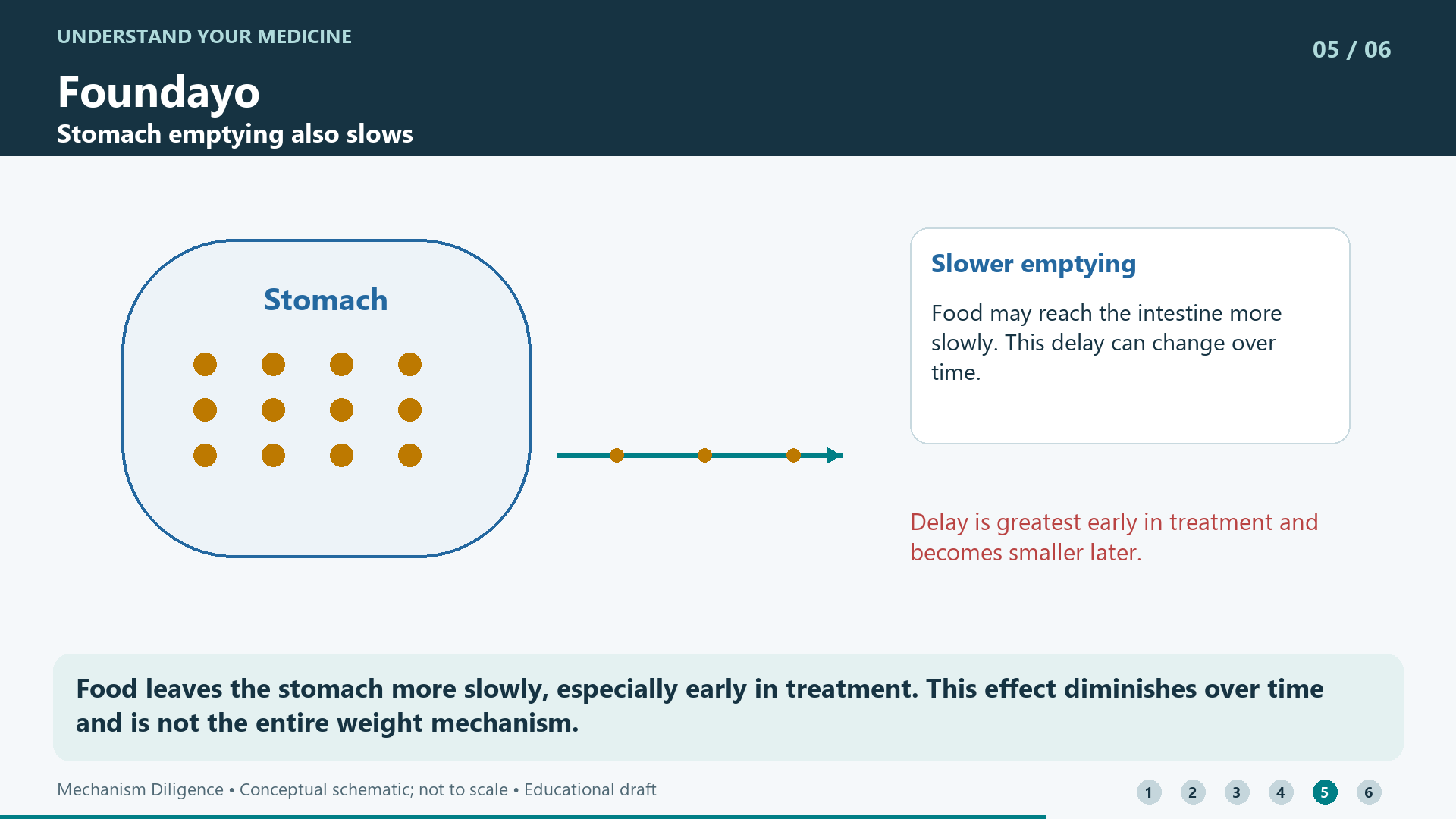
Food leaves the stomach more slowly, especially early in treatment. This effect diminishes over time and is not the entire weight mechanism.
Gastric delay may affect oral medicines. Nausea is an adverse effect, not a required sign of benefit.
Do not equate slower stomach emptying with permanent blockage or deliberate vomiting.
- FDA Foundayo prescribing information — July 2026 · Boxed Warning; sections 1, 5, 12.1–12.3, 13.1 and 14 · Current US regulatory label; selected sections inspected · checked 2026-10-17
Chapter 6: Weight outcomes need human evidence
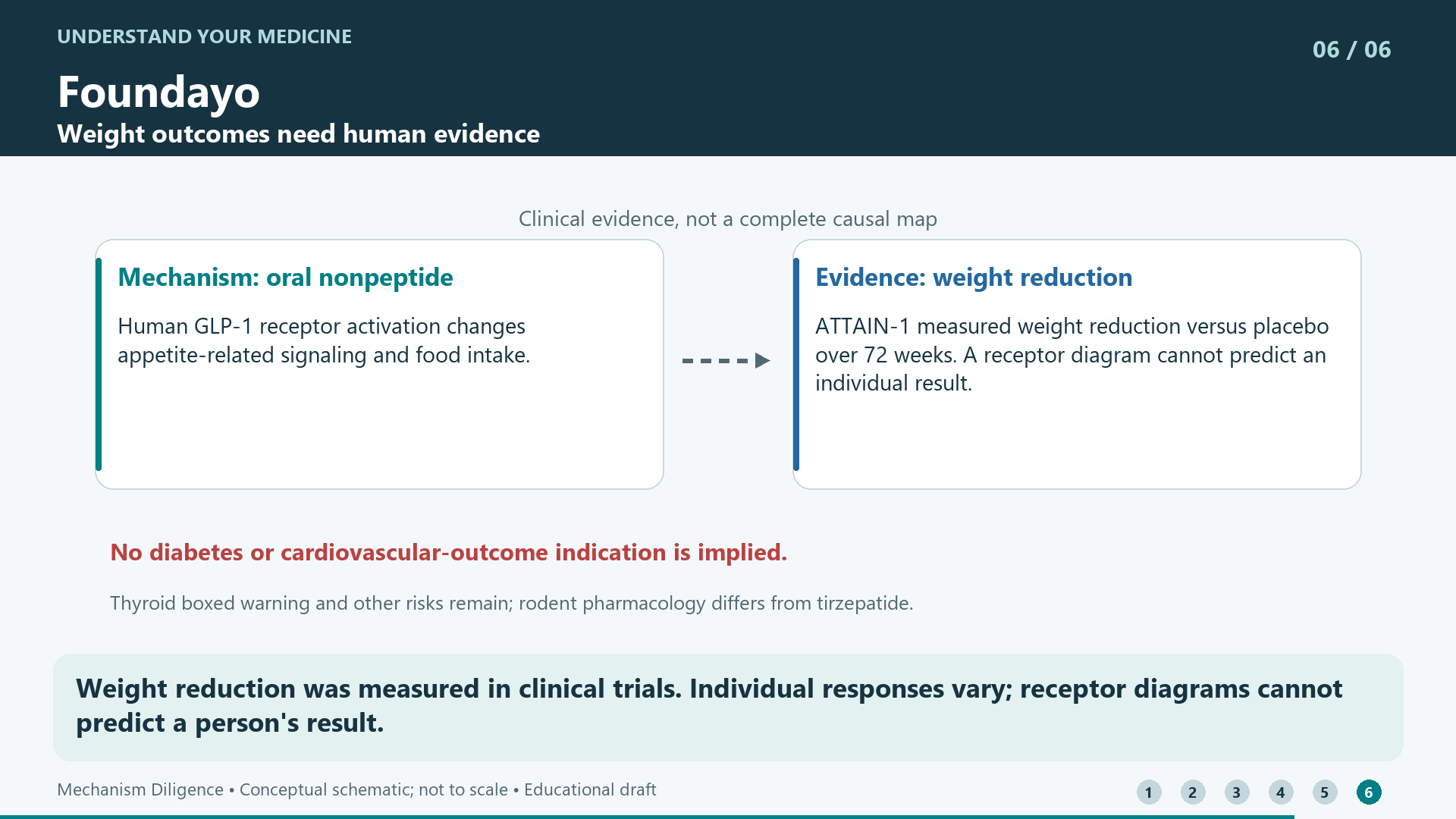
Weight reduction was measured in clinical trials. Individual responses vary; receptor diagrams cannot predict a person's result.
ATTAIN-1 found weight reduction versus placebo over 72 weeks. The diagram does not imply a diabetes or cardiovascular indication. Foundayo retains a thyroid boxed warning despite its different rodent pharmacology.
Mechanism is not a complete safety guide; the full label remains essential. Independent clinical review pending.
- ATTAIN-1 — Orforglipron for obesity treatment · Abstract conclusion; 72-week randomized placebo-controlled obesity trial · Primary clinical trial; indexed abstract conclusion inspected · checked 2026-10-17
- FDA Foundayo prescribing information — July 2026 · Boxed Warning; sections 1, 5, 12.1–12.3, 13.1 and 14 · Current US regulatory label; selected sections inspected · checked 2026-10-17
References & Sources
Source pages checked 2026-10-17. AI-assisted editorial source checking is not independent clinical review. Sources support the summary, mechanism, safety and access information; references are also kept beside each question.
- FDA Foundayo prescribing information — revised July 2026 ↗ · Boxed Warning; 1, 3–8, 11, 12.1–12.3, 13.1, 14; Medication Guide
- FDA approval of Foundayo (orforglipron), April 1, 2026 ↗ · Product identity, approval date and adult weight-management indication
- Structural basis for GLP-1 receptor activation by LY3502970, an orally active nonpeptide agonist ↗ · Primary structural and pharmacological experiments; species selectivity; not comparative clinical efficacy
- The pharmacological basis for nonpeptide agonism of the GLP-1 receptor by orforglipron ↗ · Primary receptor assays and preclinical experiments; intrinsic efficacy and arrestin recruitment
- LillyDirect — Foundayo access information ↗ · Prescription access and eligibility information; prices intentionally not reproduced
- Foundayo prior authorization and coverage guides ↗ · Manufacturer coverage guidance; not a coverage guarantee
Selective US-label-based information, not a complete safety list or a personal treatment recommendation. Do not change treatment based on this page; use the product-specific label and your care team's advice.