Trulicity (Drug class: GLP-1 receptor agonist — long-acting injection)
US Trulicity dulaglutide single-dose subcutaneous pen: glucose control with diet and exercise for type 2 diabetes from age 10, and cardiovascular-risk reduction in adults with type 2 diabetes plus established cardiovascular disease or multiple risk factors. This is not a weight-management indication. No dosing or switching instructions are provided.
Educational draft · independent clinical review pending. Silent mechanism animation available; no recorded narration.
Uses / Symptoms
- Type 2 diabetes glucose control from age 10 years, with diet and exercise
- Major cardiovascular-event risk reduction in adults with type 2 diabetes and established disease or multiple cardiovascular risk factors
- Not approved as a weight-management product
Effects
- Supports glucose-dependent insulin release through GLP-1 receptors
- Reduces glucagon secretion and slows stomach emptying
- REWIND supports the cardiovascular indication; clinical benefits are not guaranteed for each person
Side effects
- Nausea, diarrhea, vomiting, abdominal pain and reduced appetite are common
- Important risks include pancreatitis, gallbladder disease, dehydration-related kidney injury and retinopathy complications
- Boxed thyroid C-cell tumor warning; insulin and sulfonylureas increase low-glucose risk
How does Trulicity work? What is the Mechanism Of Action (MOA)?
Trulicity activates GLP-1 receptors to help the pancreas release insulin when blood sugar is high. It also reduces glucagon, a signal that tells the liver to release sugar, and slows food leaving the stomach. These actions lower blood sugar; its heart-risk benefit is supported by clinical studies in certain adults with type 2 diabetes.
The mechanism, step by step
- Incretins support glucose-responsive insulin
Physiological GLP-1 signaling helps pancreatic beta cells coordinate insulin release with the glucose level.
- Dulaglutide activates GLP-1 receptors
Its modified GLP-1–Fc fusion provides prolonged exposure while retaining receptor agonist activity.
- Beta-cell cAMP signaling increases
Adenylyl cyclase signaling raises cAMP and supports insulin release in a glucose-dependent manner.
- Glucagon and gastric emptying change
Reduced glucagon secretion and slower stomach emptying also contribute to glucose regulation.
- Outcome trials establish specific benefits
REWIND supports cardiovascular-risk reduction in the defined adult population. That evidence is separate from receptor biology and does not create a weight-management indication.
A perspective-aware, six-chapter visual narration is available when JavaScript is enabled.
Questions & Answers (FAQ)
How does Trulicity work?
Trulicity activates GLP-1 receptors to help the pancreas release insulin when blood sugar is high. It also reduces glucagon, a signal that tells the liver to release sugar, and slows food leaving the stomach. These actions lower blood sugar; its heart-risk benefit is supported by clinical studies in certain adults with type 2 diabetes.
Who is Trulicity labeled for?
For glucose control, adults and children aged 10 years and older with type 2 diabetes, with diet and exercise. Its cardiovascular indication is for adults with type 2 diabetes and established cardiovascular disease or multiple cardiovascular risk factors; it does not automatically apply to children.
What does REWIND show?
REWIND compared dulaglutide with placebo added to existing care in adults with type 2 diabetes and cardiovascular disease or risk factors. The primary composite of cardiovascular death, nonfatal heart attack or nonfatal stroke occurred less often with dulaglutide. This does not promise protection for every individual or prove that all benefits arise through one pathway.
Is Trulicity approved for weight management?
No. The reviewed US indications are diabetes glucose control and a defined cardiovascular-risk-reduction use. Changes in weight during diabetes studies are not the same as an approved obesity indication.
What side effects are common?
Nausea, diarrhea, vomiting, abdominal pain and reduced appetite are common. Severe or ongoing gastrointestinal symptoms need review, especially if drinking becomes difficult or signs of dehydration appear.
What is the thyroid boxed warning?
Dulaglutide caused thyroid C-cell tumors in rats; whether it causes them in humans is unknown. Trulicity is contraindicated with personal or family medullary thyroid carcinoma or MEN2. The warning does not establish a human tumor rate.
Can hypoglycemia still occur?
Yes. Insulin and insulin-releasing medicines such as sulfonylureas increase the risk, including severe episodes. Glucose-dependent receptor action does not remove that risk; the full regimen needs review by the treating team.
Why mention a history of diabetic retinopathy?
Retinopathy complications were observed in the cardiovascular outcomes trial, and the label advises monitoring patients with a retinopathy history. Rapid improvement in glucose control can temporarily worsen retinopathy. New vision changes should be reported promptly.
What kidney precautions apply?
Fluid loss from severe vomiting or diarrhea can cause acute kidney injury. Do not apply exenatide's numeric renal cutoffs to Trulicity: its label includes renal-impairment data and calls for caution in end-stage disease and monitoring with severe gastrointestinal symptoms.
Which symptoms need urgent assessment?
Severe persistent abdominal pain may indicate pancreatitis; upper-abdominal pain with fever or jaundice may indicate gallbladder disease. Seek emergency help for breathing difficulty or face or throat swelling. This is not the complete warning list.
What should the anesthesia team know?
Tell the team before general anesthesia or deep sedation because Trulicity delays stomach emptying and aspiration has been reported with GLP-1 medicines. The label does not establish one holding interval that prevents aspiration. Get a procedure-specific plan.
What else belongs in a prescribing discussion?
Discuss pregnancy, severe gastroparesis, prior pancreatitis or allergy, kidney function, eye disease and every other medicine. Slower stomach emptying can change how quickly oral medicines are absorbed. Bring the full medication list to the prescriber or pharmacist.
Online stores and Pharmacies (Buy)
Trulicity requires a prescription. Use the official manufacturer resource for product and support information, then confirm the exact prescribed presentation with a licensed pharmacy. No prices, inventory, coverage approval or savings eligibility are verified by this page.
No live price, stock or individual eligibility is verified here.
Animation chapters, evidence & visual limits
Dulaglutide subcutaneous injection for type 2 diabetes glucose control from age 10; cardiovascular-risk reduction in adults with type 2 diabetes and established cardiovascular disease or multiple risk factors.
Educational draft; independent clinical review pending. Original explanatory schematics, not atomic structures, microscopy, measured concentrations or patient simulations. Selective mechanism and safety context, not complete prescribing information or dosing/switching instructions. The Fc segment supports the medicine's design; this is not an immune-targeting antibody treatment. No approved weight-management or separate kidney indication is implied.
Original conceptual illustrations. AI-assisted editorial source check; independent clinical review pending. No recorded narration.
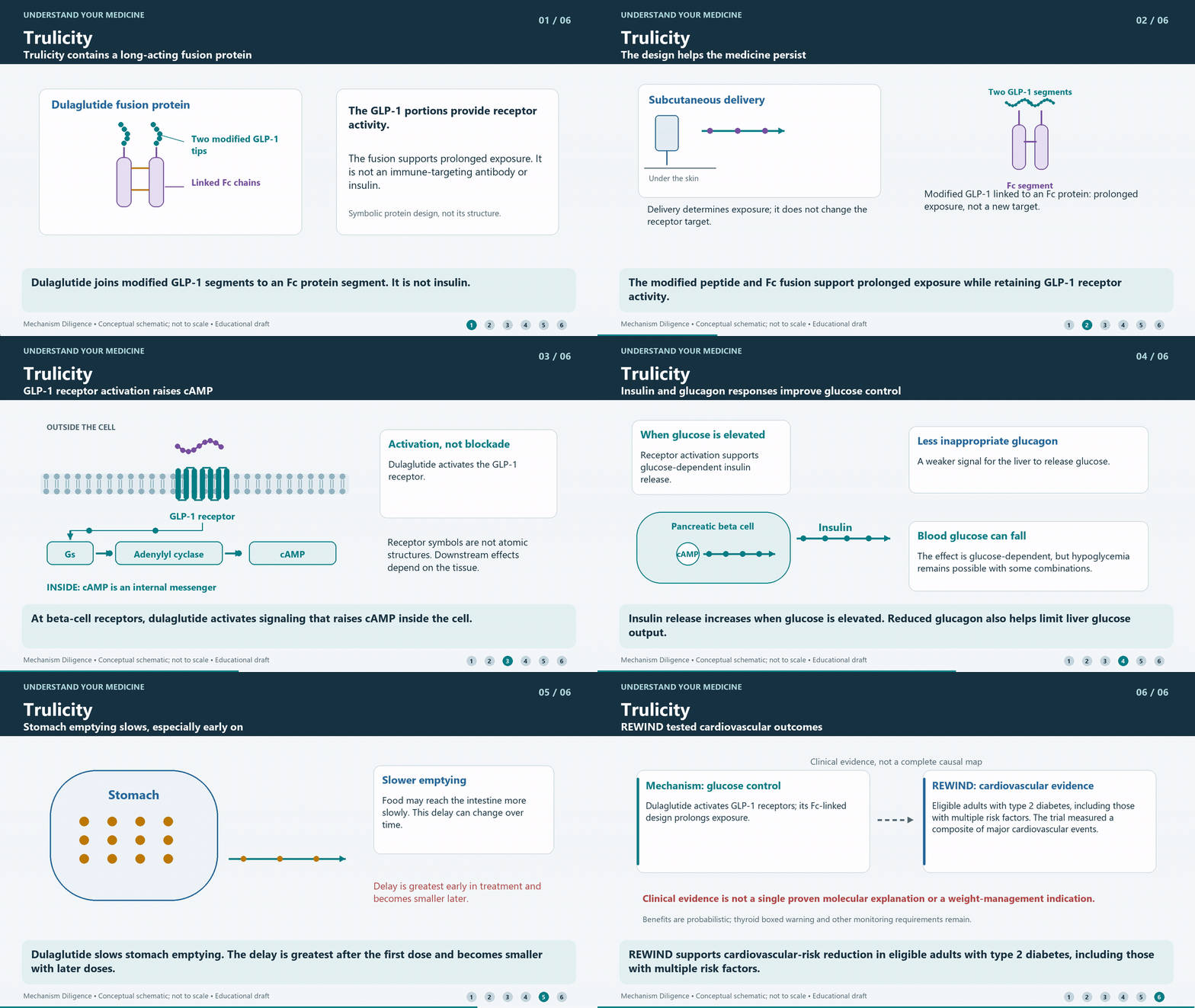
Chapter 1: Trulicity contains a long-acting fusion protein
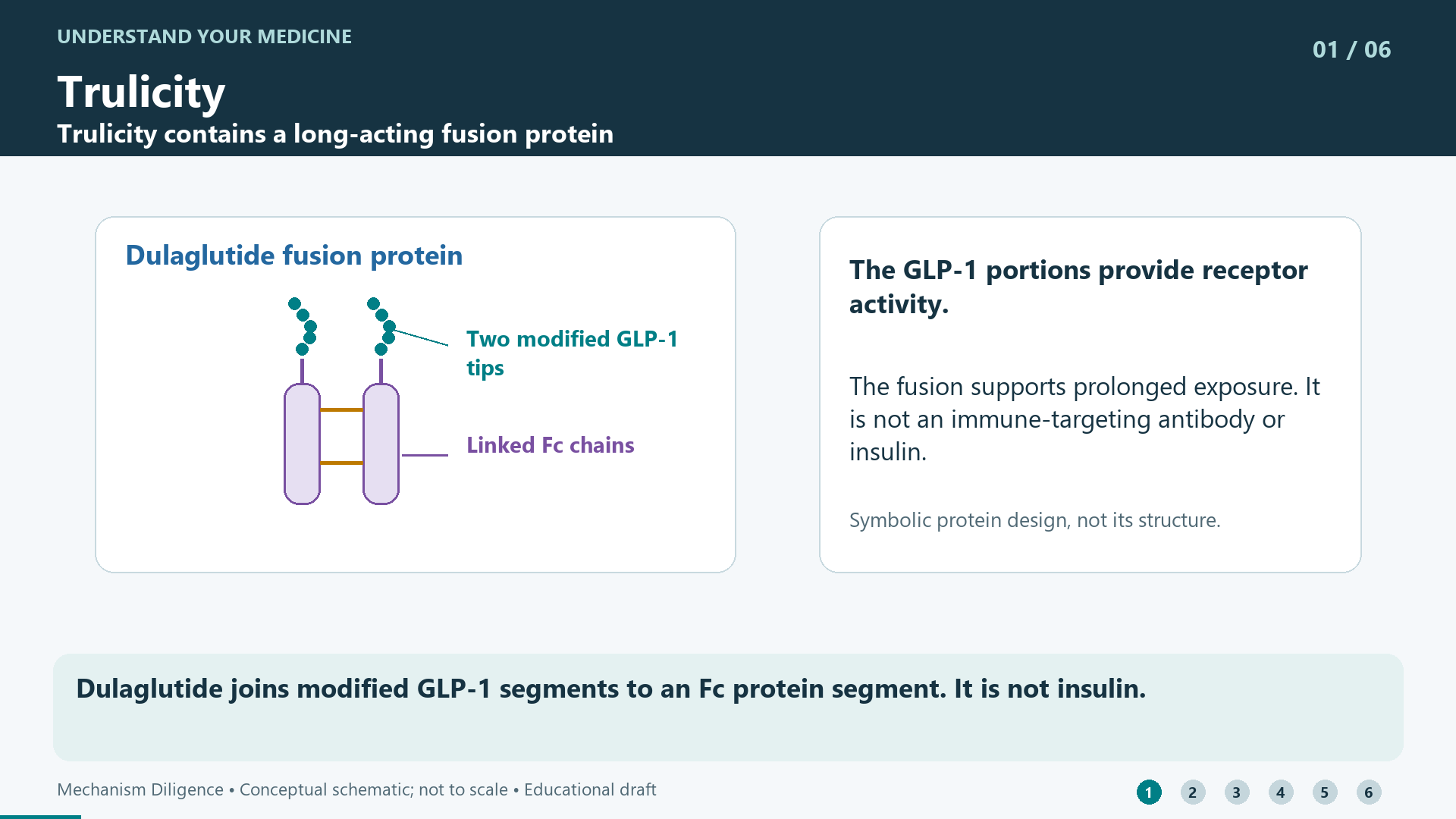
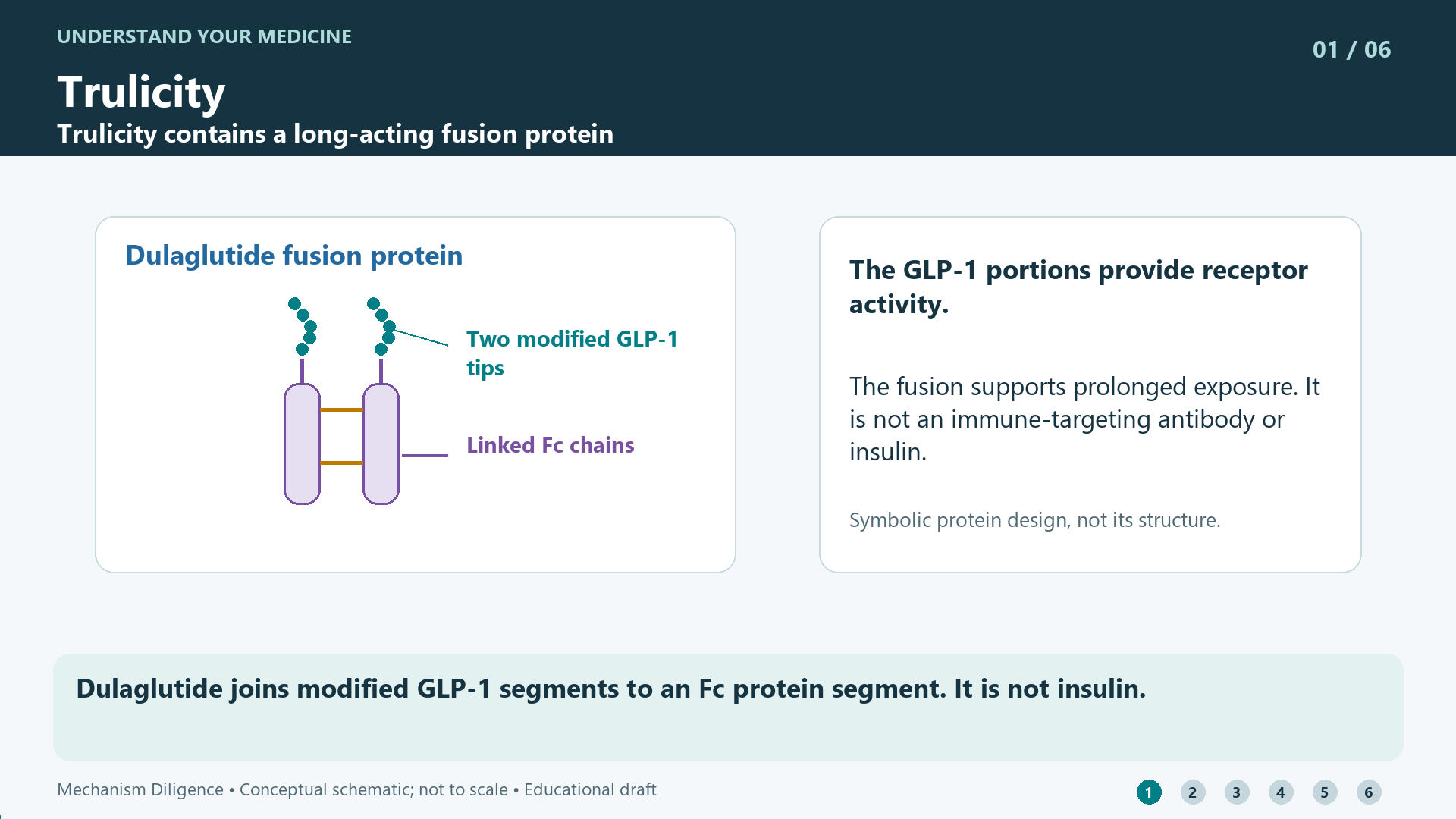
Dulaglutide joins modified GLP-1 segments to an Fc protein segment. It is not insulin.
Two linked chains each contain a modified GLP-1 analogue attached to modified human IgG4 Fc. Its therapeutic action is receptor agonism, not targeting immune cells as an antibody.
Protein shape and scale are symbolic; the Fc is not depicted as an immune attack mechanism.
- Trulicity US prescribing information — Eli Lilly · Revised March 2026; sections 1, 5, 7.1, 11–12, 14.5; boxed warning. · Primary source; relevant sections inspected · checked 2026-10-17
- Glaesner et al. — Engineering and characterization of GLP-1–Fc fusion LY2189265 · Diabetes Metabolism Research and Reviews 2010;26:287–296; engineering, receptor/cAMP assays and animal pharmacology. · Primary protein-engineering study; indexed abstract/results inspected; animal findings not treated as human outcomes. · checked 2026-10-17
Chapter 2: The design helps the medicine persist
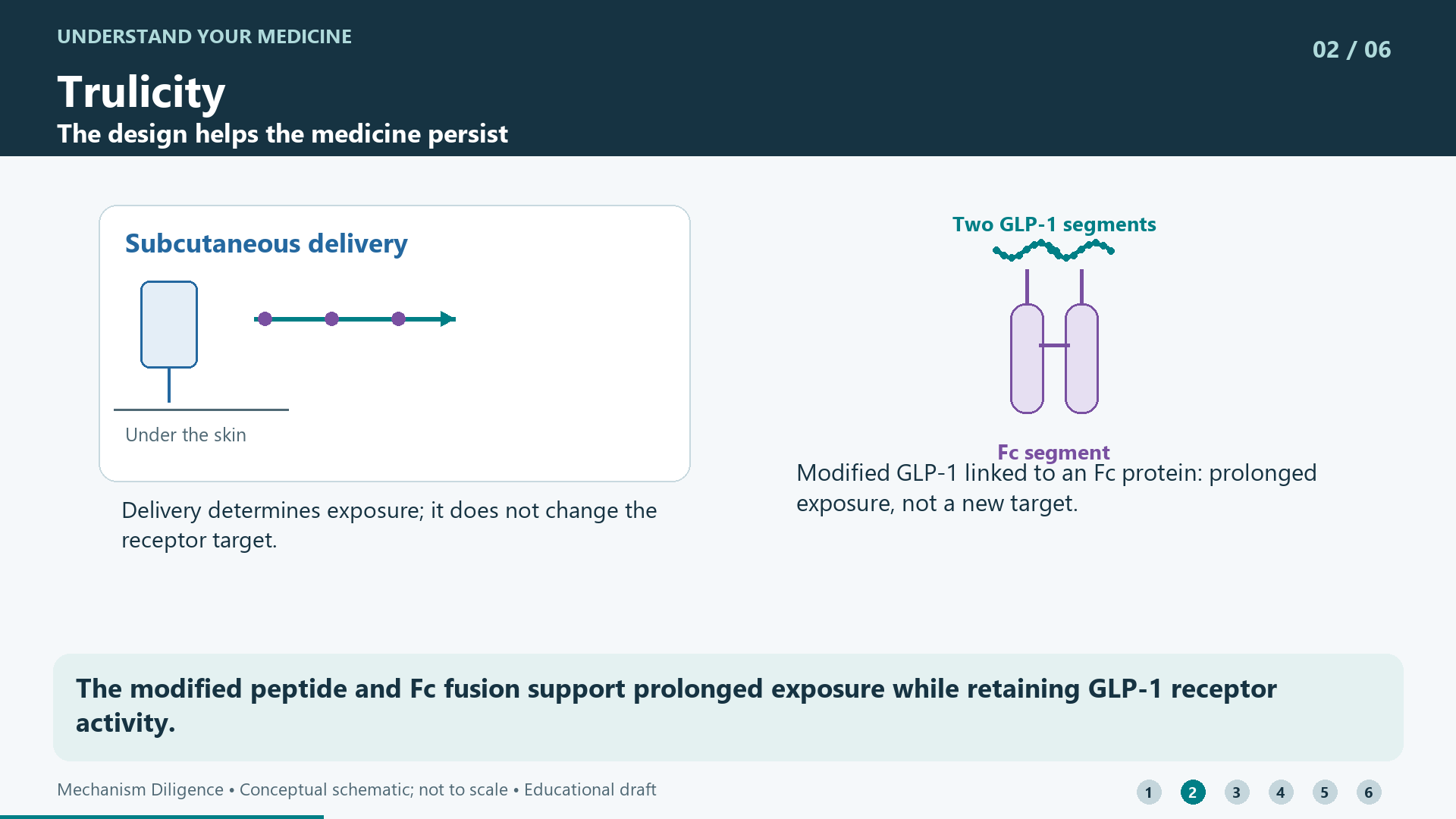
The modified peptide and Fc fusion support prolonged exposure while retaining GLP-1 receptor activity.
Protein engineering altered enzyme-sensitive and Fc regions while preserving agonist activity. Preclinical experiments supported extended activity; the current product label establishes human pharmacokinetics.
Persistence is not literal permanent binding or an efficacy comparison with another medicine.
- Trulicity US prescribing information — Eli Lilly · Revised March 2026; sections 1, 5, 7.1, 11–12, 14.5; boxed warning. · Primary source; relevant sections inspected · checked 2026-10-17
- Glaesner et al. — Engineering and characterization of GLP-1–Fc fusion LY2189265 · Diabetes Metabolism Research and Reviews 2010;26:287–296; engineering, receptor/cAMP assays and animal pharmacology. · Primary protein-engineering study; indexed abstract/results inspected; animal findings not treated as human outcomes. · checked 2026-10-17
Chapter 3: GLP-1 receptor activation raises cAMP
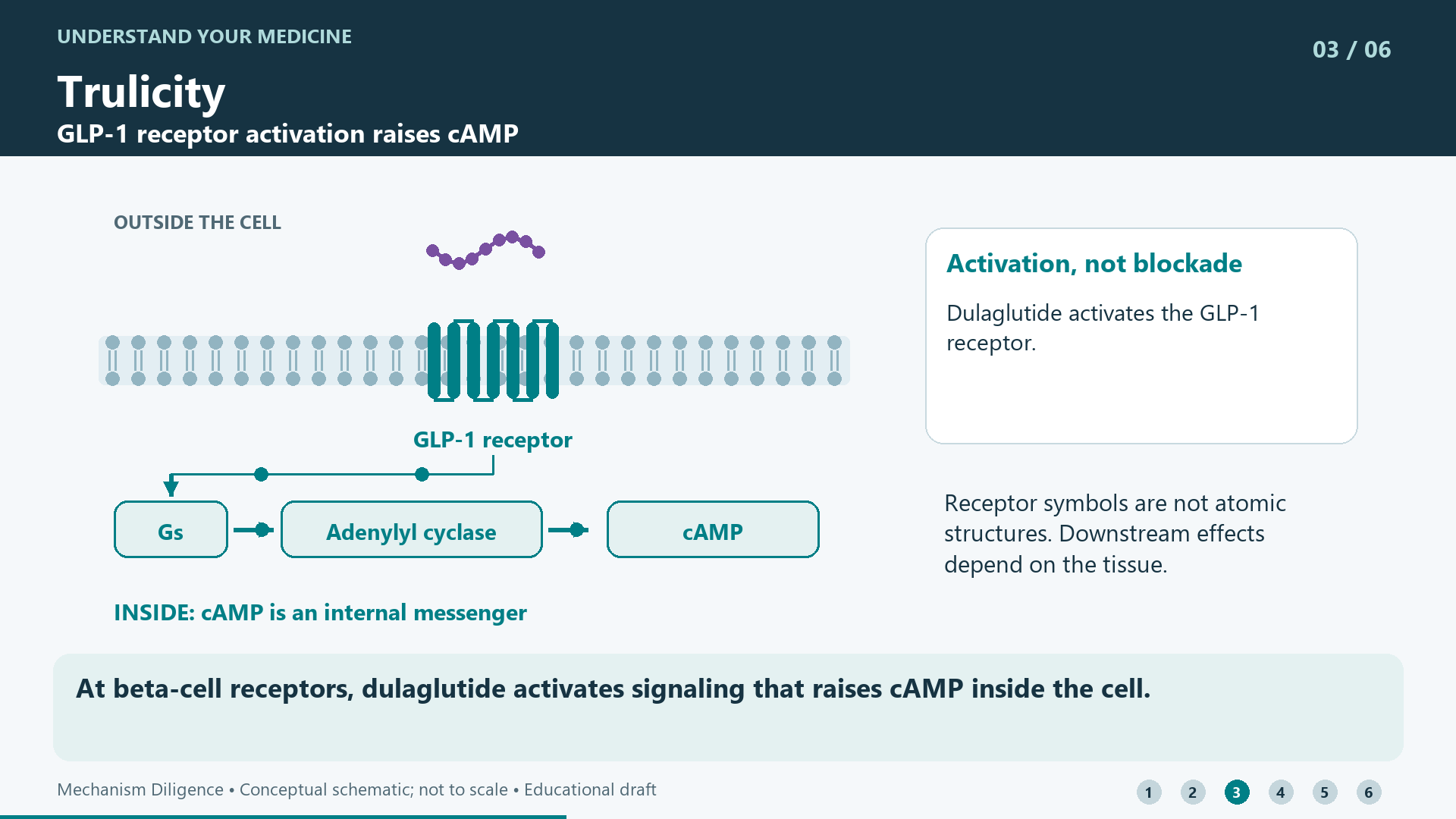
At beta-cell receptors, dulaglutide activates signaling that raises cAMP inside the cell.
The GLP-1 portion provides receptor agonism; coupling to adenylyl cyclase increases intracellular cAMP. The Fc segment is not a second glucose receptor agonist.
Cartoon does not define binding stoichiometry or an atomic interaction.
- Trulicity US prescribing information — Eli Lilly · Revised March 2026; sections 1, 5, 7.1, 11–12, 14.5; boxed warning. · Primary source; relevant sections inspected · checked 2026-10-17
- Glaesner et al. — Engineering and characterization of GLP-1–Fc fusion LY2189265 · Diabetes Metabolism Research and Reviews 2010;26:287–296; engineering, receptor/cAMP assays and animal pharmacology. · Primary protein-engineering study; indexed abstract/results inspected; animal findings not treated as human outcomes. · checked 2026-10-17
Chapter 4: Insulin and glucagon responses improve glucose control
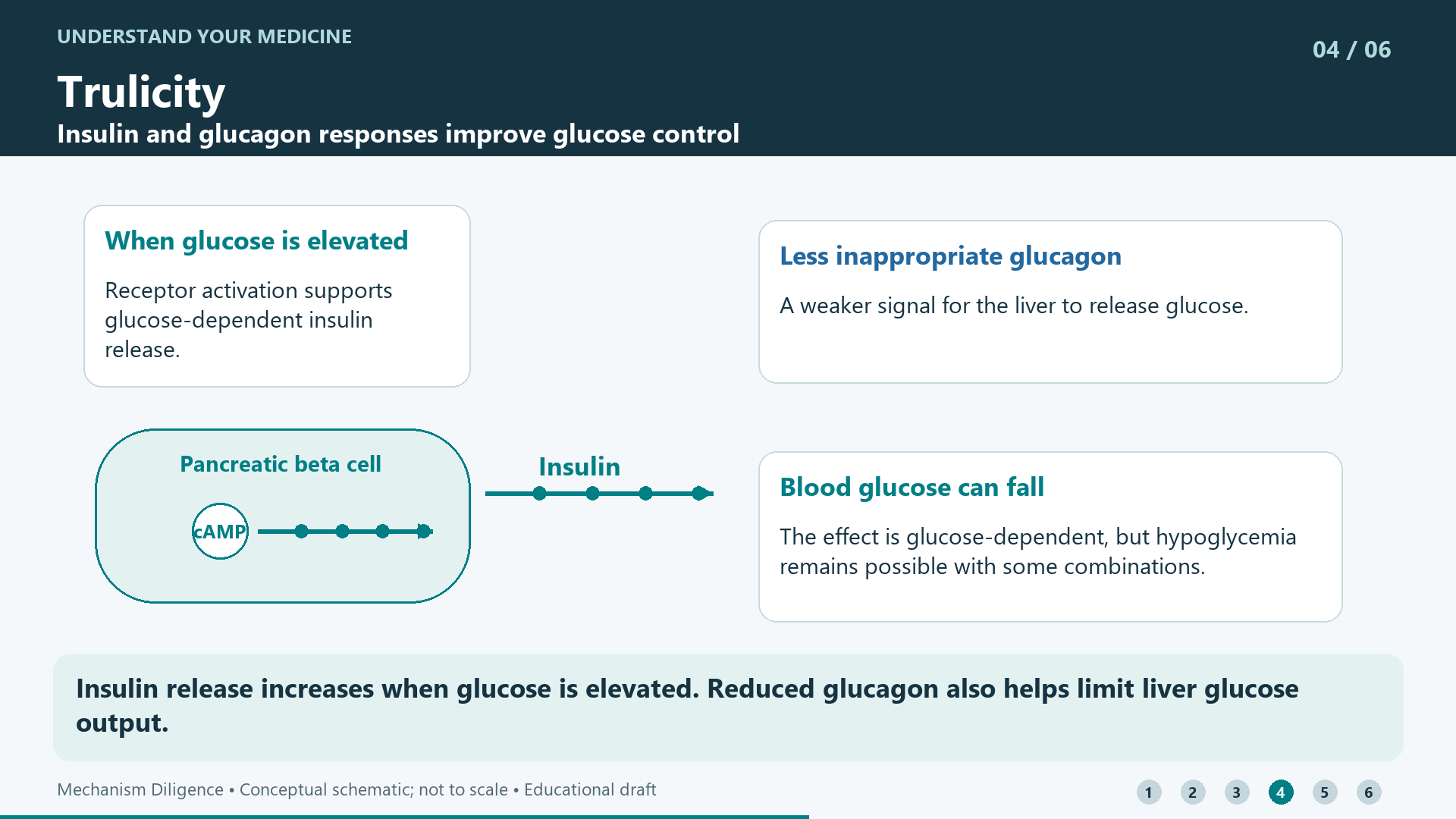
Insulin release increases when glucose is elevated. Reduced glucagon also helps limit liver glucose output.
These complementary endocrine effects lower fasting and after-meal glucose. Insulin or sulfonylureas can still increase hypoglycemia risk despite glucose-dependent action.
Pathway contributions and clinical response vary; low-glucose risk is not eliminated.
- Trulicity US prescribing information — Eli Lilly · Revised March 2026; sections 1, 5, 7.1, 11–12, 14.5; boxed warning. · Primary source; relevant sections inspected · checked 2026-10-17
Chapter 5: Stomach emptying slows, especially early on
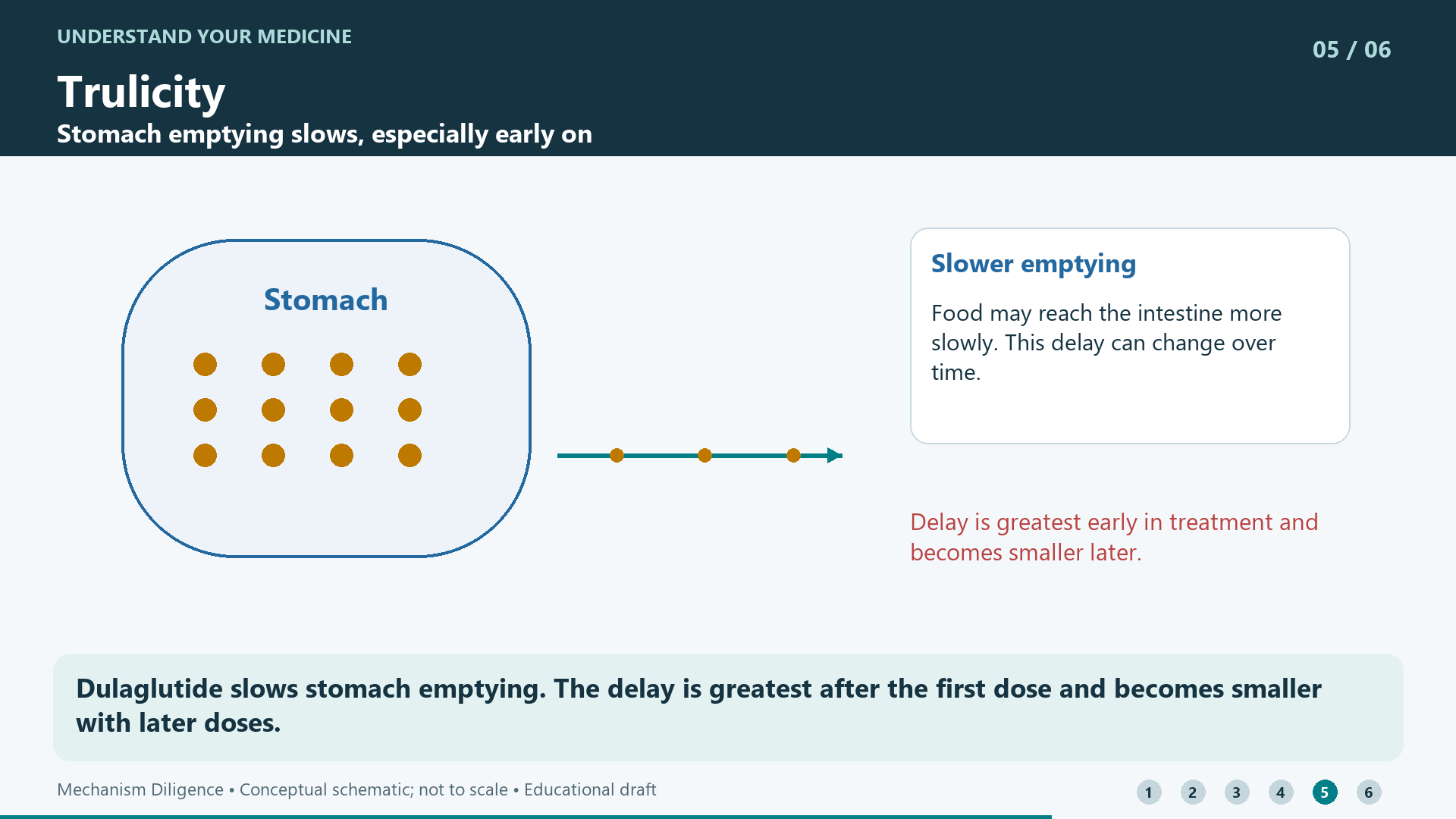
Dulaglutide slows stomach emptying. The delay is greatest after the first dose and becomes smaller with later doses.
The label notes attenuation with subsequent doses and appropriate escalation. Slower emptying can affect oral-drug absorption; it is not permanent stomach paralysis or complete prevention of nutrient absorption.
This depicts a general observed pattern, not a prediction for a particular person.
- Trulicity US prescribing information — Eli Lilly · Revised March 2026; sections 1, 5, 7.1, 11–12, 14.5; boxed warning. · Primary source; relevant sections inspected · checked 2026-10-17
Chapter 6: REWIND tested cardiovascular outcomes
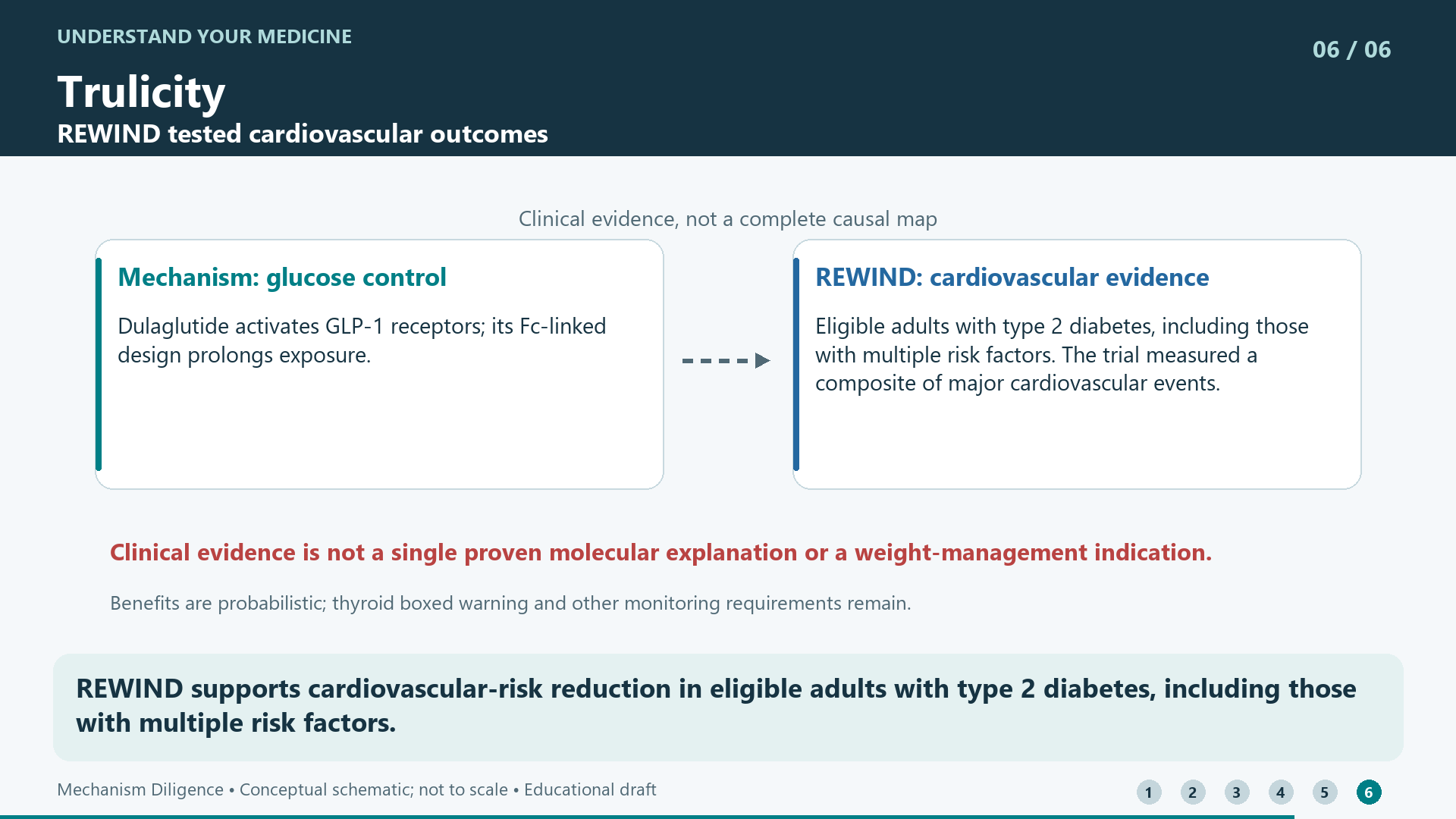
REWIND supports cardiovascular-risk reduction in eligible adults with type 2 diabetes, including those with multiple risk factors.
The trial measured a composite of cardiovascular death, nonfatal heart attack or nonfatal stroke. Its results support the specific label, not a weight-management indication or proof of one molecular heart mechanism.
Clinical benefits are probabilistic; independent clinical review remains pending.
- Trulicity US prescribing information — Eli Lilly · Revised March 2026; sections 1, 5, 7.1, 11–12, 14.5; boxed warning. · Primary source; relevant sections inspected · checked 2026-10-17
- Gerstein et al. — REWIND cardiovascular outcomes · Lancet 2019;394:121–130; DOI 10.1016/S0140-6736(19)31149-3; label section 14.5 cross-check. · Primary randomized trial; indexed record and directly inspected label trial results. · checked 2026-10-17
References & Sources
Source pages checked 2026-10-17. AI-assisted editorial source checking is not independent clinical review. Sources support the summary, mechanism, safety and access information; references are also kept beside each question.
- Eli Lilly: Trulicity US prescribing information ↗ · Revised 03/2026; boxed warning; 1; 3–8; 11–12; 14.5–14.6; Medication Guide. Checked 2026-10-17.
- Gerstein et al. (2019): REWIND cardiovascular outcomes ↗ · Primary randomized trial abstract inspected; 9,901 participants; primary three-component cardiovascular endpoint; median follow-up 5.4 years. Checked 2026-10-17.
- Lilly: Trulicity patient information and support ↗ · US product identity, indications, safety information and support navigation. No price or inventory claim retained. Checked 2026-10-17.
Selective US-label-based information, not a complete safety list or a personal treatment recommendation. Do not change treatment based on this page; use the product-specific label and your care team's advice.